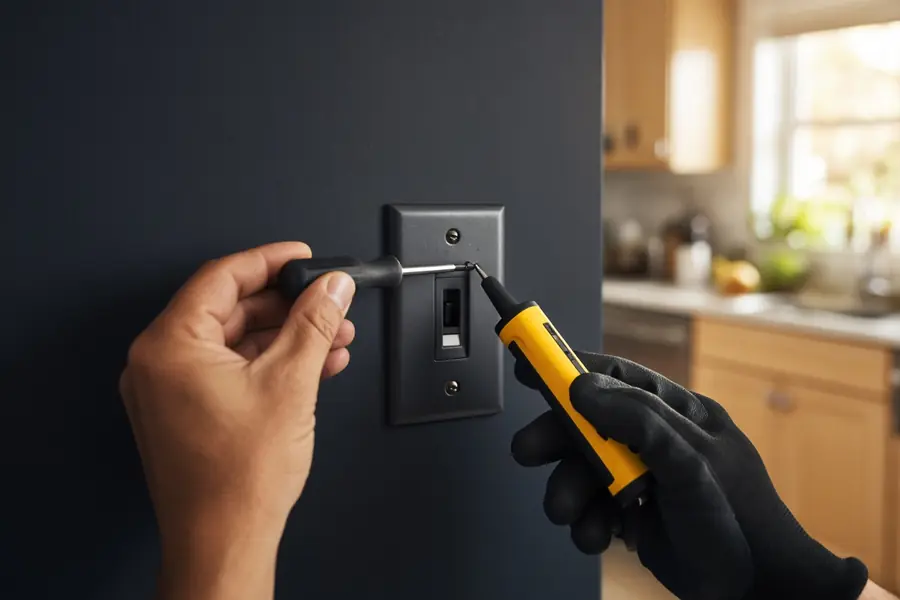
Plenty of electrical work is fine to do yourself. Some of it isn't, and the difference isn't skill, it's consequence. Here's a straight answer.
Reasonable DIY
- Replacing a light fixture or ceiling fan on an existing, properly rated box
- Swapping a switch or outlet like-for-like, with the breaker off and a tester confirming it's dead
- Replacing a dimmer with an LED-compatible one
- Resetting breakers and GFCIs
Call a licensed electrician
- Anything at the panel. The main lugs are live even with the main breaker off.
- New circuits, EV chargers, 240V outlets. These need a permit in most cities, and an inspection.
- Anything that's already shown heat. Warm plates, scorch marks, burning smell.
- Aluminum wiring, knob-and-tube, or a fuse box. Older systems with specific failure modes.
- Troubleshooting. Finding a fault takes instruments and experience, and guessing costs more.
The part nobody mentions
Unpermitted electrical work can void a homeowner's insurance claim and comes up at sale. A licensed contractor pulls the permit, carries a license bond, and stands behind the work with a warranty. At RRJ that warranty is one year on parts and workmanship, in writing.
Rule of thumb: if you'd have to watch a video first, and the video involves the panel, call.