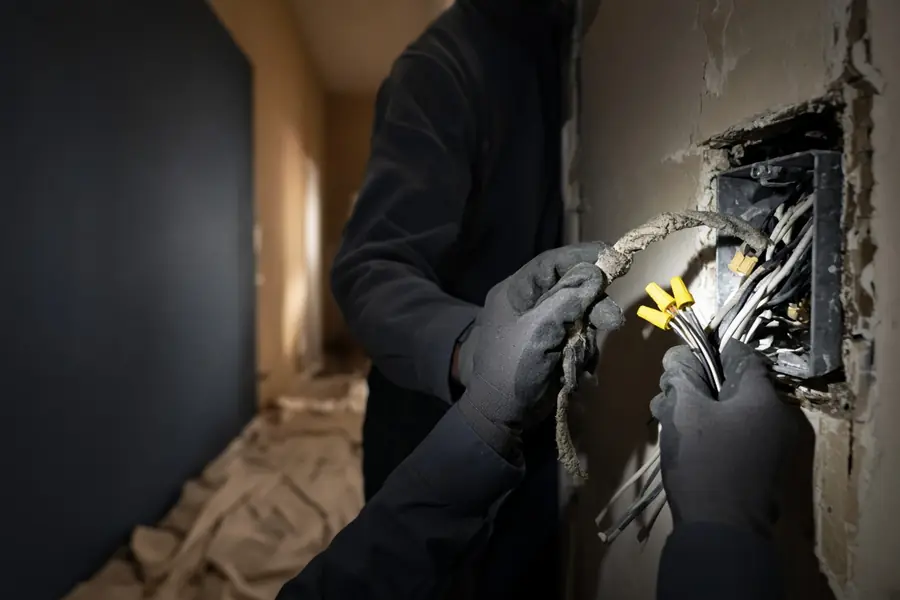
Faulty wiring is a broad phrase for a short list of real problems. Once you know which one you have, the repair is usually straightforward.
The usual suspects
- Loose connections. Wires backstabbed into outlets and switches loosen over decades. They cause heat, flicker and intermittent power. Fix: re-terminate on the screws, or replace the device.
- Open neutrals. A broken neutral makes lights brighten and dim oddly and can damage electronics. Fix: find the break, usually in a box or at the panel, and repair it.
- Damaged cable. Rodents, nails, water and heat all chew through insulation. Fix: replace the damaged section in a proper junction box, or rerun the cable.
- Overloaded circuits. Too many rooms on one breaker. Fix: split the circuit and add a dedicated one where the big loads live.
- Aluminum branch wiring. Common in late-60s and early-70s homes. Fix: approved connectors at every device, or a rewire of the affected runs.
- Failed devices. Worn outlets, switches, GFCIs and breakers. Fix: replace with the correct rating.
Why the diagnosis comes first
A dead outlet can be a bad outlet, a tripped GFCI two rooms away, a loose neutral in the box before it, or a breaker on its way out. Replacing the outlet fixes exactly one of those. Testing first means you pay for one repair instead of three guesses.
Every repair carries a one-year warranty on parts and workmanship, and Roy will show you what he found so you know what changed in your house.