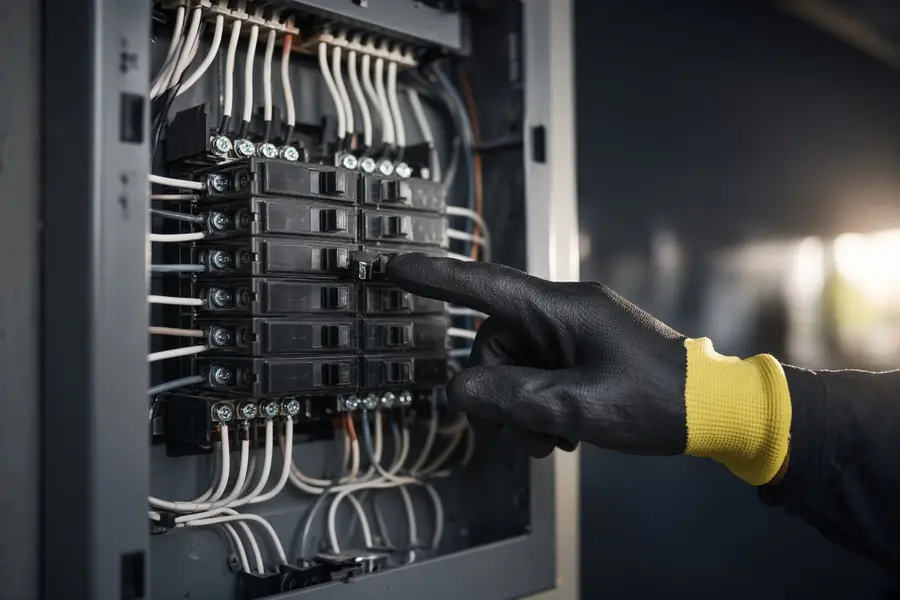
A circuit breaker has one job: open the circuit before the wire behind your drywall gets hot enough to start a fire. When it trips, it's protecting you. The question is why, and there are really only three answers.
1. Overload
The most common cause by far. A 15-amp kitchen circuit running a microwave, a toaster and a coffee maker at the same time will trip, and it should. The tell is timing: it trips when you turn something on, and it stays on when you spread the load out. The fix is not a bigger breaker. It's a dedicated circuit for the heavy appliance, which is a half-day job in most homes.
2. Short circuit or ground fault
A hot wire touching a neutral or a ground. The breaker trips instantly and hard, sometimes with a pop, and it often won't reset. Common culprits are a damaged cord, a failed appliance, a nail through a cable, or water in an outdoor box. This one needs a professional, because the fault is somewhere along the run and it has to be found, not guessed.
3. A worn-out breaker
Breakers are mechanical. After thousands of cycles, or decades of heat, they can trip below their rating or feel mushy when you reset them. If a breaker trips with very little on the circuit and the wiring tests clean, the breaker itself is the part.
What you can safely do first
- Unplug everything on the circuit and reset the breaker once. Firmly off, then on.
- Plug things back in one at a time. If one appliance trips it, that appliance is the problem.
- If it trips with nothing plugged in, or the breaker is hot or smells, stop and call.