Anyone can replace a breaker. Diagnosing one takes a process, because three very different problems produce the same symptom at the kitchen counter. Here's how we work it.
Step 1: Confirm the symptom
Which breaker, how often, under what load. We recreate the conditions if we can. A breaker that trips with the dryer and the A/C running together is telling a different story than one that trips at 3 a.m. with nothing on.
Step 2: Measure the load
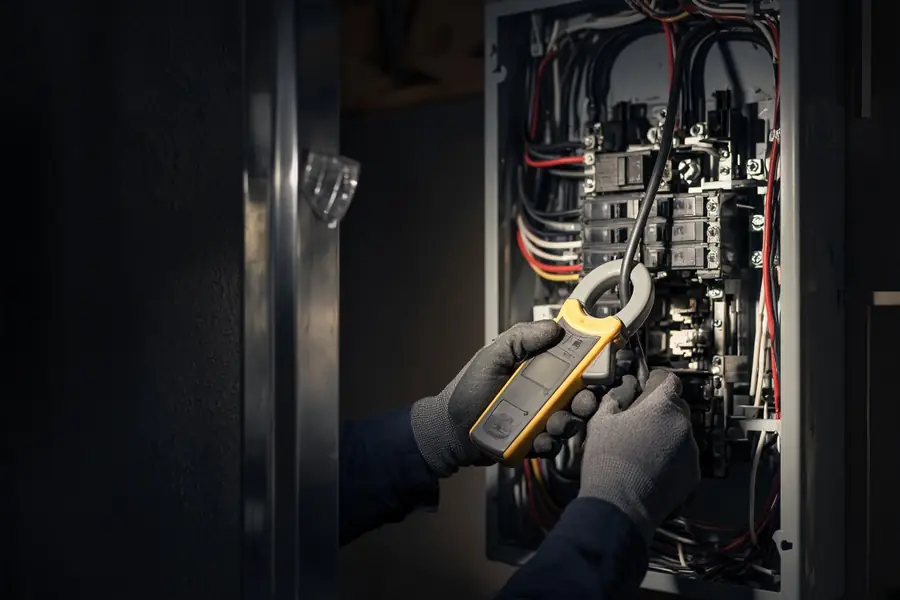
A clamp meter on the circuit shows exactly how many amps it's pulling. A 20A breaker seeing 24 amps isn't malfunctioning, it's overloaded, and the fix is a new circuit, not a new breaker.
Step 3: Isolate the wiring
With the circuit dead we check for shorts and ground faults from the panel out: insulation resistance, continuity, and a look at every box on the run for a loose or burned connection. Outdoor boxes, junctions in attics, and backstabbed outlets are the usual finds.
Step 4: Test the breaker itself
Only after the load and the wiring check out do we suspect the part. Breakers can weaken with age and heat and trip below their rating. Hot to the touch, discolored, or mushy to reset are all signs.
You get the findings in plain English and a price before any parts go in. Most breaker diagnoses are finished in a single visit.