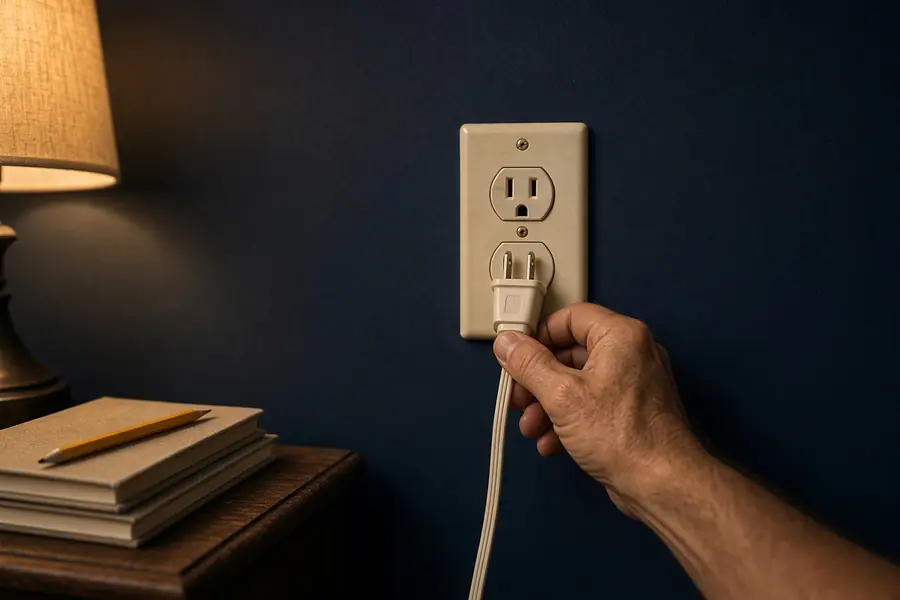
Outlets are the most-used electrical device in a house and the most ignored. Here's what to look for, roughly in order of urgency.
Call today
- Warm or discolored cover plates. Heat at an outlet means a loose or failing connection behind it.
- Scorch marks, melted plastic or a burning smell. Turn off the breaker for that circuit first, then call.
- Sparks when you plug something in beyond a tiny blue flash. Big or repeated sparks mean a fault.
Call this month
- Plugs that fall out. Worn contacts inside the outlet make poor connections, which make heat.
- GFCI outlets that trip constantly or won't reset. Either a real fault downstream or a worn device.
- Outlets that work sometimes. Usually a backstabbed connection that's loosened with age.
Plan for it
- Two-prong outlets. Ungrounded, common in Modesto homes from before the mid-60s. Options range from GFCI protection to a full ground.
- Not enough outlets. If a power strip is doing the job an outlet should, add the outlet.
- No GFCI near water. Kitchens, baths, garages, laundry and outdoors all need it under current code.
An outlet check is a quick visit. Roy can usually look at every outlet in a house, test them, and give you a list of what's fine, what's worth fixing, and what can wait.